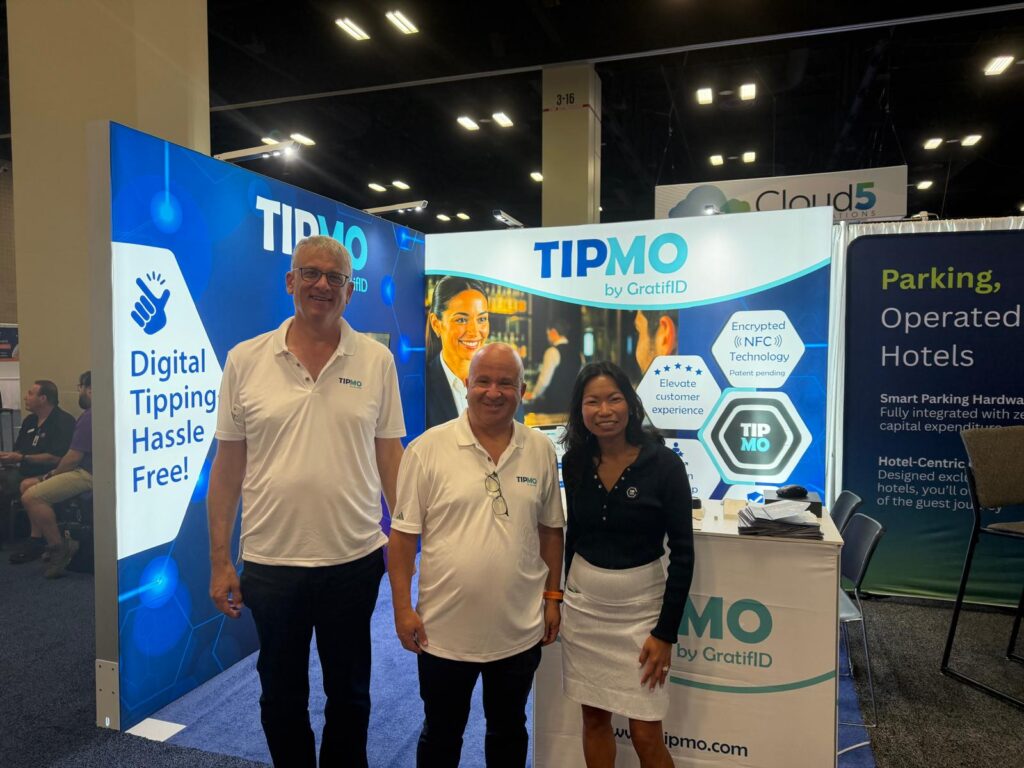
San Antonio made one thing clear: digital tipping has arrived as a serious operational priority.
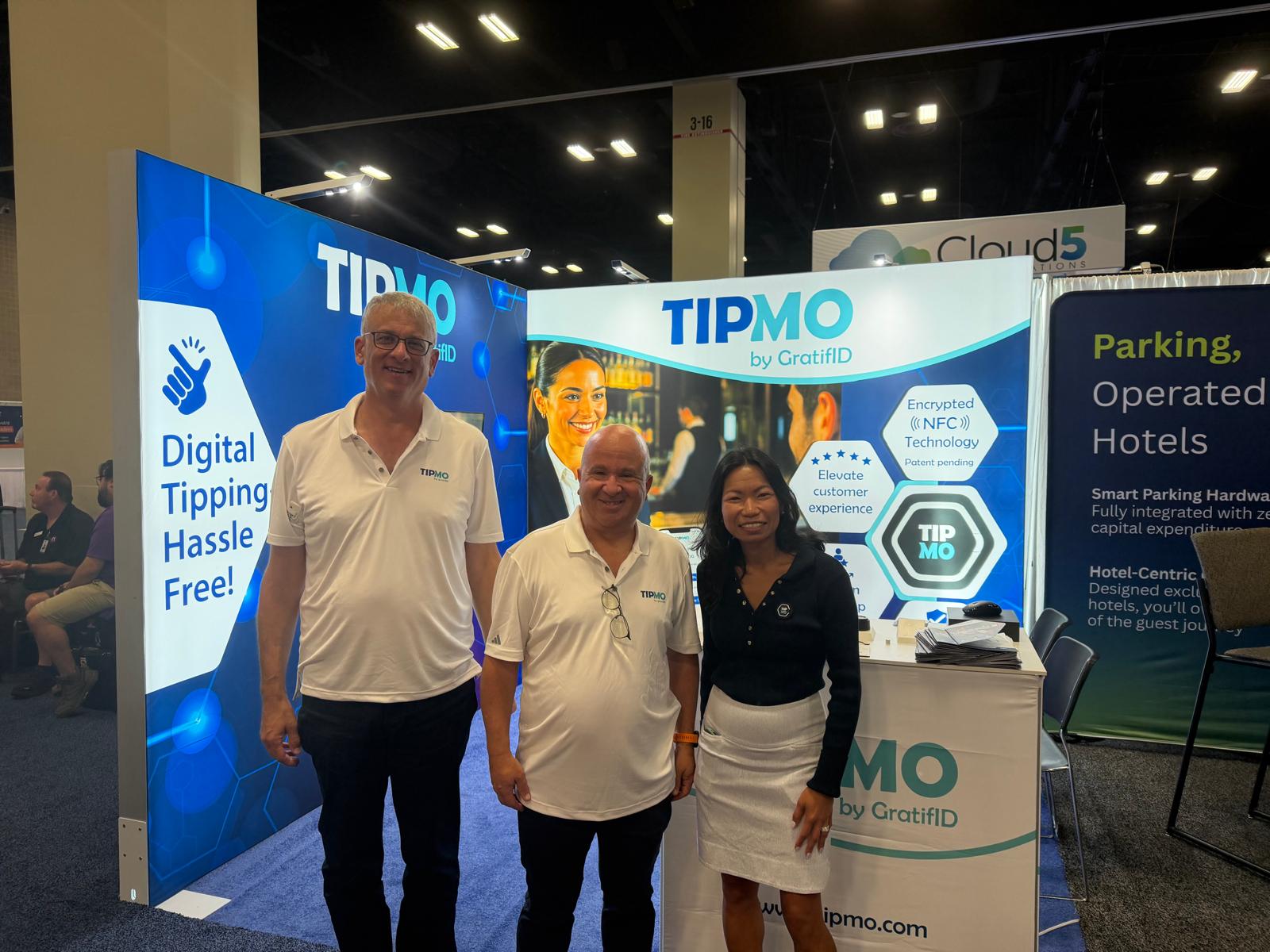
HITEC 2026 brought together thousands of hospitality technology leaders across four days at the Henry B. González Convention Center. For TIPMO, it was a debut, and the conversations that filled our booth told us something important about where the industry actually stands on cashless gratuity.
The questions on the show floor had moved forward. From “should we do this” to “how does this work with our existing structure” and “how do we know it’s secure.” That shift matters. The category has cleared the awareness hurdle. What remains is the implementation conversation, and that conversation is more nuanced than most digital tipping vendors are prepared for.
Here is what we heard, and what it means.
Recognition is changing faster than the infrastructure supporting it
Every operator we spoke with understood the problem. Cash carry rates have collapsed. Guests who genuinely want to tip their housekeeper, their bellhop, their concierge have no mechanism to do it. The intent is there. The friction is structural, not attitudinal.
What surprised us was how clearly hospitality leaders connected this to retention. The conversation was consistently framed as “our people aren’t being recognized, and we’re losing them because of it.” That framing reflects a maturity in how the industry thinks about tip income, as a core component of the employment proposition rather than a supplement to wages.
The properties most seriously evaluating digital tipping were doing so because their housekeeping teams had told them something needed to change.
The housekeeping question
No role came up more consistently than housekeeping. And the challenge is genuinely harder there than anywhere else in a hotel.
A bartender has a natural transaction moment. A valet returns your car. A bellhop walks you to your room. These interactions have a beginning, a middle, and a clear end — a moment where appreciation can be expressed. Housekeeping works differently. The guest is rarely present. The room is cleaned, turned over, and the worker moves on. There is no handshake, no eye contact, no natural moment of exchange.
This is exactly where NFC-based personal credentials change the equation. A housekeeper’s TIPMO tag, worn as a keychain, a badge, or a wristband, can be left in the room during service. A guest who returns to find their room turned to an exceptional standard has a mechanism: tap, tip, done. No cash required. No app. No friction. The recognition reaches the person who earned it, directly and immediately.
Several operators told us this was the first digital tipping model they had seen that actually solved the housekeeping problem rather than working around it.
Security was the conversation that defined the show
The theme that surfaced most consistently at HITEC 2026 was security. Hospitality leaders were actively evaluating solutions and asking the right questions. They wanted to know what was actually protecting the transaction.
The concern is legitimate. Most digital tipping products on the market today are built on commodity NFC stickers or static QR codes that can be cloned, copied, or physically swapped by anyone with a $15 reader and five minutes. In a hotel environment where a tag might sit on a housekeeping cart in an unmonitored corridor, that vulnerability is an operational reality worth taking seriously.
TIPMO is built on the NTAG 424 DNA chip, the same cryptographic standard used in pharmaceutical anti-counterfeiting and high-security access control. Every tap generates a unique, one-time cryptographic signature. A cloned tag produces nothing. A replayed link from a previous tap is already expired. The chip’s memory is permanently locked after production and tamper-evident if anyone attempts to remove it.
On the payment side, no financial data passes through TIPMO’s infrastructure at all. Every transaction is handled by Stripe, processed through Apple Pay or Google Pay, and authenticated by the guest’s own device using Face ID or Touch ID. TIPMO never sees a card number, a bank detail, or any personal financial information.
When we explained this architecture on the show floor, the response was consistent: this is what we were hoping existed.
How this fits existing gratuity structures
One practical question came up repeatedly: how does digital tipping interact with tip pooling?
TIPMO is designed to support whatever model a property already operates. Tips flow directly to individual workers by default, but the platform is built with the flexibility hospitality operations actually require. Properties running individual tipping, departmental pools, or hybrid models can maintain their existing workflows without redesigning compliance or payroll architecture.
The compliance dimension matters here too. The no-tax-on-tips provision that took effect in 2026 has added new reporting requirements for tipped income. Properties with clean, individually attributed tip records are in a stronger position when those records need to support a worker’s deduction claim. TIPMO’s architecture produces exactly that: a clean, worker-level record from the moment of transaction.
What comes next
HITEC confirmed what we already believed: the hospitality industry is ready for this. The questions coming across our booth were implementation questions, security questions, compliance questions — the kind of questions that follow a decision made in principle, with execution as the next step.
Properties that move forward on genuinely secure, worker-owned NFC tipping gain something their competitors will work to catch up to: a workforce that earns more, stays longer, and delivers the kind of service quality that shows up in review scores and repeat bookings. The compounding effect of that is real, and it starts with a tap.
We are grateful for every conversation in San Antonio. If yours is one we should continue, we would welcome the chance.