Why Venmo Puts Your Hotel Tipping Program at Risk
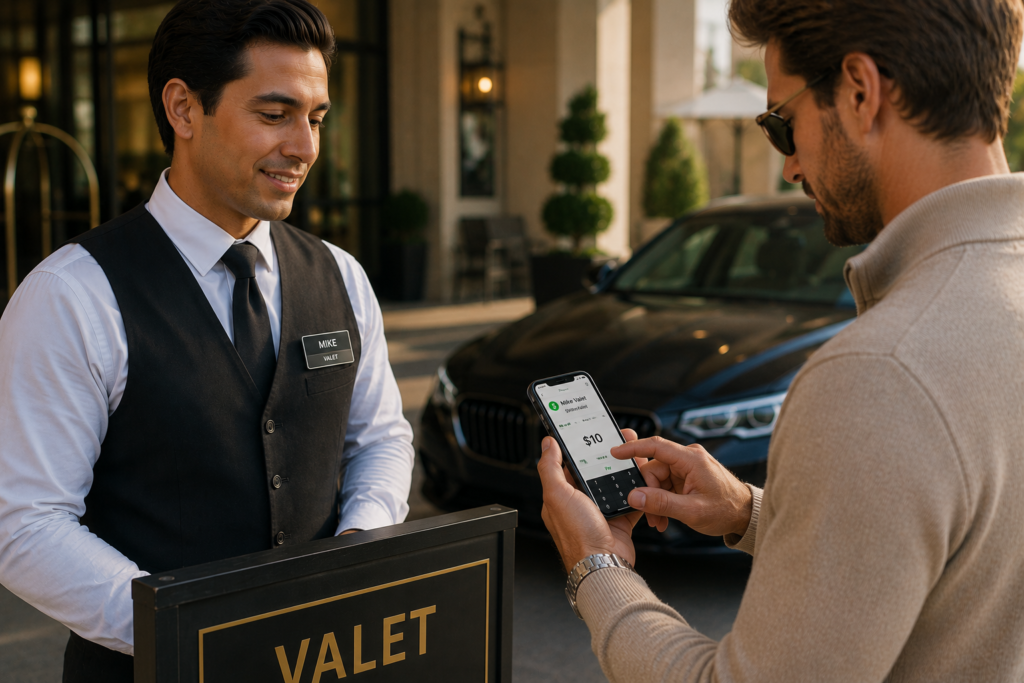
It starts with the best of intentions. A guest wants to tip a housekeeper but has no cash. The housekeeper, trying to be helpful, offers her Venmo handle. The guest sends $10. Everyone feels good about the interaction and moves on.
What just happened, from a hotel operator’s perspective, is a compliance exposure, a security risk, a tax reporting gap, and a brand liability — all in the space of fifteen seconds.
Peer-to-peer payment apps were built for splitting dinner bills and paying a friend back for concert tickets. They were not built for hotel tipping in a commercial hospitality environment. The gap between what they are designed for and what they are being used for in hotels across the country is creating problems that operators are only beginning to reckon with.
What peer-to-peer hotel tipping actually looks like
When a hotel has no formal digital tipping infrastructure, workers improvise. Venmo handles get shared verbally. CashApp QR codes get taped to carts. Zelle details get passed between regulars and their favorite bartender. It is informal, it is inconsistent, and from the outside it looks like a non-issue because nobody is tracking it.
But the informality is precisely the problem. Every P2P transaction that flows through a worker’s personal payment app on hotel property is operating entirely outside the property’s visibility, outside its compliance architecture, and outside any framework the hotel has established for how money changes hands between guests and staff.
For an industry already navigating the complexity of the No Tax on Tips provision under the One Big Beautiful Bill Act, tip pooling compliance, and new IRS reporting requirements for the 2026 tax year, that invisibility is not a minor operational inconvenience. It is a liability sitting in plain sight.
Hotel tipping risks for operators
The operator-level risks of informal hotel tipping fall into three categories, each with real financial and reputational exposure.
Compliance and reporting. Beginning with tips earned in 2026, the IRS requires employers to report qualified tip income on Form W-2 using a specific Treasury Tipped Occupation Code, alongside the amount itself. Tips that flow through a worker’s personal Venmo account leave no record that the hotel can access, verify, or attribute to a specific occupation. If the IRS audits a worker’s deduction claim and the supporting transaction history runs through a personal payment app rather than a compliant tipping platform, the hotel that allowed informal P2P tipping on its property is not insulated from the downstream consequences.
Brand and guest experience. When a guest is asked to send money to a personal Venmo account, the interaction shifts from a professional service exchange to something that feels, however briefly, like a private financial arrangement. For a premium property that has invested significantly in the quality of its guest experience, that moment of friction is inconsistent with the brand standard at every other touchpoint. Guests who are uncomfortable with P2P requests — and many are, particularly international travelers unfamiliar with American payment apps — simply do not tip. Tipping norms already vary sharply by market; one international travel survey found roughly 60% of American travelers say they always tip on vacation, compared with just 11% of Italian travelers, a gap that widens further when the ask involves downloading an unfamiliar app rather than handing over cash. The worker loses income. The guest leaves with a slightly diminished impression of the property.
Security and fraud exposure. Personal payment apps have no fraud protection designed for commercial tipping environments. A worker who shares her Venmo QR code publicly on a housekeeping cart has no way to verify who is sending money or why. A bad actor who obtains a worker’s P2P details can send small test transactions to verify the account before attempting larger fraud. And because these transactions occur entirely outside the hotel’s systems, the property has no visibility into patterns that might indicate something is wrong until it is too late.
Hotel tipping risks for workers
The compliance risk in hotel tipping falls even more directly on the workers themselves, and it is one that most P2P-reliant tipped employees are not aware of until it becomes a problem.
Tax exposure without protection. Tip income received through Venmo, CashApp, or Zelle is taxable income. The IRS treats it identically to cash tips — it must be reported, and failure to report it creates back-tax liability. Unlike a compliant tipping platform that generates clean transaction records, a personal payment app produces transaction histories that are not formatted for tax reporting and may not clearly distinguish tip income from personal transfers. Workers who receive tip income through P2P apps and do not report it accurately are taking on individual tax risk that a proper tipping platform would eliminate entirely.
No access to the no-tax-on-tips deduction. The 2026 federal deduction on qualified tip income requires that tips be properly reported and attributed. Tips flowing through personal payment apps, with no formal record connecting them to a specific tipped occupation at a specific property, are difficult to qualify. Workers using P2P apps for tip income may be forfeiting the most significant tax benefit the hospitality industry has seen in a generation, simply because their income is running through the wrong channel.
No portability, no reputation, no record. Every tip a worker receives through a personal payment app disappears into a transaction history that means nothing to a future employer. There is no rating attached. No verified record of service excellence. No portable credential that travels with the worker to their next job. The income arrives, but the professional value of the interaction is lost entirely. A worker building their career in hospitality deserves more than that.
What a formal hotel tipping infrastructure actually provides
The alternative to informal hotel tipping is not more complexity. It is less.
A worker-owned NFC tipping credential — a keychain, a badge, a wristband — gives guests a single tap to complete a tip through Apple Pay or Google Pay. No personal payment details are exchanged. No app download is required. The transaction is processed through bank-grade payment infrastructure, arrives in the worker’s account instantly, and generates a clean, individually attributed record that serves the worker’s tax reporting, the property’s compliance architecture, and the guest’s expectation of a premium, friction-free experience.
For the hotel, the compliance footprint is minimal. No PMS integration. No IT lift. No redesign of existing payroll or tip distribution workflows. The property establishes a formal tipping channel, removes the informal one, and gains visibility into tip activity across the property through a management dashboard that P2P apps will never provide.
For the worker, the shift is more significant. Every tap builds a verified record. Every rating accumulates into a portable professional reputation. Every dollar arrives instantly, through a compliant channel, with the documentation needed to claim every available tax benefit. The income that used to disappear into a personal app becomes the foundation of a professional identity.
The hotel tipping conversation worth having before it becomes a problem
Most hotels that have informal P2P tipping happening on property have not made a deliberate policy decision to allow it. It has simply filled the vacuum left by the absence of a formal alternative. Guests want to tip. Workers want to be tipped. With no sanctioned digital channel available, both parties find the path of least resistance.
The solution is not to prohibit P2P apps and leave workers without a digital tipping option. It is to provide a better one — one that serves the guest experience, protects the worker’s financial interests, and gives the property the compliance architecture the 2026 tax environment requires.
The vacuum is easy to fill. The problems that accumulate inside it are harder to unwind.
Frequently asked questions
Is it legal for hotel guests to tip staff through Venmo?
There’s no law against it, but it creates compliance exposure for the hotel. Tips paid through personal P2P apps aren’t visible to the property, aren’t tied to a verified occupation code, and fall outside the hotel’s compliance architecture — even though the underlying transaction is legal.
What is the No Tax on Tips provision and how does it affect hotel workers?
The No Tax on Tips provision, part of the One Big Beautiful Bill Act, allows a federal deduction on qualified tip income starting in 2026 — but only if tips are properly reported and attributed to a specific tipped occupation on Form W-2. Tips routed through personal payment apps often can’t meet that documentation standard.
What are the risks of P2P apps in hotel tipping?
Three main categories in hotel tipping: compliance and tax reporting gaps, brand and guest-experience friction, and security exposure from unverified personal payment requests happening on property.
What is NFC tipping?
NFC tipping lets a guest tap their phone against a worker’s tap-enabled device (a keychain, badge, or wristband) to send a tip instantly through Apple Pay or Google Pay — no app download, no personal payment details exchanged, and a clean record generated automatically.
See what your hotel tipping compliance actually looks like — schedule a demo at tipmo.com →