Tipping fatigue is real. The workers most likely to pay for it are the ones who never asked for a tip in the first place.
In October, two women dressed as showgirls were arrested on the Las Vegas Strip after a fight over a $20 tip left a tourist injured. Soon after, Clark County put a message on Strip marquees: when watching performances or taking a photo, tipping is not required.
Those signs are aimed at street performers and costumed characters who pressure visitors, not at hotel staff. The county says it has no objection to performers receiving tips. But the message appeared in a city built on hospitality, and it captures a mood that reaches well beyond the Strip: guests are tired of being asked.
When a thank-you starts to feel like a toll
Tipping used to follow a simple order. Someone provided a service, a guest noticed the effort, and a gratuity said thank you.
Now the request often comes first. Prompts appear at coffee counters, self-service kiosks and takeout windows, sometimes before anything has been received. The decision can come down to avoiding the discomfort of pressing “no tip” while someone watches.
The frustration shows up in the data. In Pew Research Center’s 2023 survey, 72% of Americans said tipping was expected in more places than five years earlier. In Bankrate’s 2025 survey, 41% said tipping culture had gotten out of control, up from 35% a year earlier.
Yet people haven’t given up on tipping. Bankrate found that tipping frequency was stabilizing after years of decline, and 77% of Americans told Pew that service quality is a major factor in whether and how much they tip. Guests may be tired of the asking, but they still care about good service.
The workers easiest to miss
The people who feel this most may be the ones already being overlooked. In the same Bankrate survey, 70% said they always tip servers at sit-down restaurants, but only 25% said the same of hotel housekeepers.
The reason isn’t hard to see. A housekeeper can prepare a spotless room without ever meeting the guest. Bell attendants and valets may get only a few seconds with someone, and that guest may not be carrying cash.
None of these employees put a tip screen in front of anyone. But that gap existed before tipping fatigue, and a guest who has been asked four times before noon is unlikely to go looking for a way to close it.
More prompts won’t fix this
Hospitality’s job is to make a gratuity possible without making it feel mandatory. A guest who returns to an exceptionally prepared room should have a way to thank the housekeeper, and a guest who doesn’t want to should never feel watched.
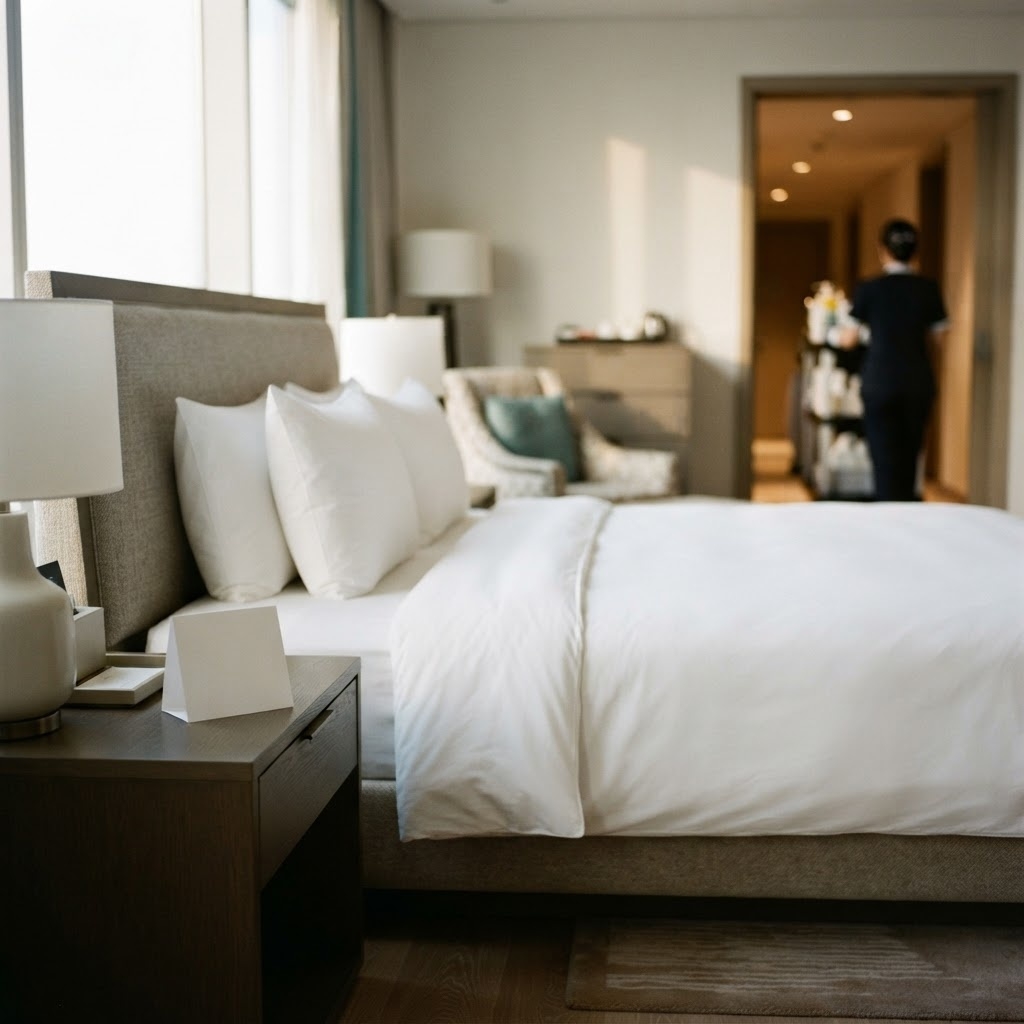
That’s why we built TIPMO around a tap, not a prompt. It can be a table tent, a badge or a wristband, depending on the role. A guest who wants to say thank you taps it with their phone and tips the person who served them. No one hands over a screen, and no one stands by waiting for the choice.
A fair question is how a guest finds out if nobody asks. The tap point has to be easy to notice, simple to understand and just as easy to ignore. A table tent in a room is an invitation. A tablet turned toward you at a counter is a request.
What this means for operators
For hotel and casino operators, this is a staffing question as much as a guest experience one. Frontline employees still depend on gratuities for income and recognition, and fewer guests carry the cash that used to make tipping easy.
Three questions can help test any tipping program:
- Who is left out? Which roles can only be tipped in cash, or only if the guest happens to see them?
- Does it interrupt service? The option should sit alongside the guest’s stay, not break into it.
- Can guests ignore it comfortably? If declining feels awkward, the program is adding to the fatigue.
Protecting the value of a thank-you
Guests are tired of feeling pressured to tip. Frontline employees still depend on gratuities. Both can be true.
Somewhere today, a housekeeper took pride in a room for a guest she will never meet. That guest may be tired of tip screens and may still want to thank her.
The goal isn’t to make every guest leave a tip. It’s to ensure that every guest who wants to say thank you has a way to do it.
TIPMO is an NFC-powered digital tipping and service visibility platform designed for modern hospitality. Learn more at tipmo.com.